
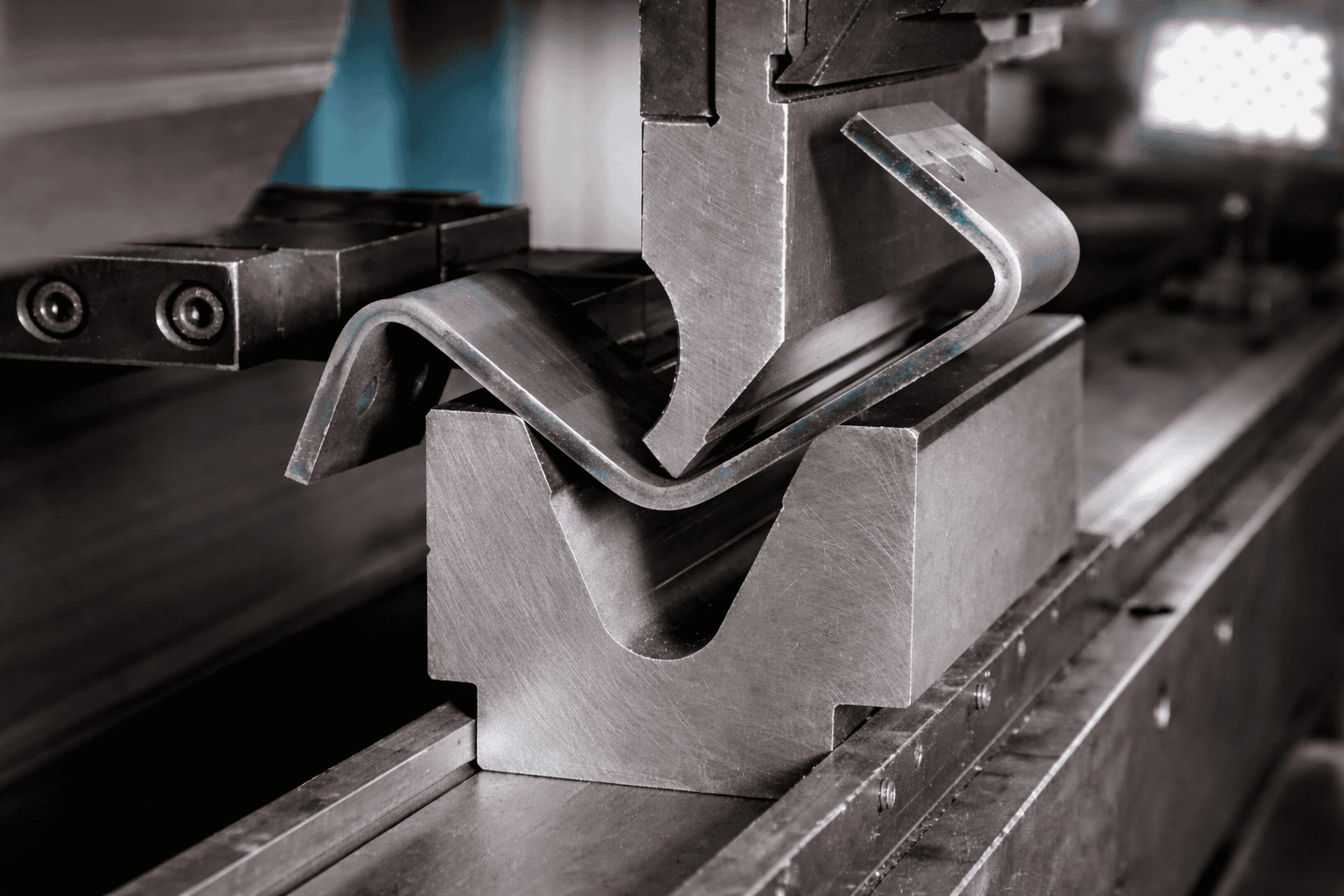
What Is Metal Stamping?
Metal stamping, or metal pressing is one of the most important and widely used manufacturing processes in modern industry. From the car you drive to the smartphone in your pocket, many of the products people use every day are made through this process. From the name, metal stamping seems like a mean to press metal, however, metal stamping is more than just pressing metal into shape. It is a precise, efficient, and highly scalable forming method that allows manufacturers to produce complex parts with consistent quality and minimal waste.
As industries continue to demand lighter, stronger, and more accurately made components, metal stamping has become a cornerstone of modern production. It combines speed, repeatability, and flexibility, making it suitable for a wide range of applications across automotive, electronics, medical devices, home appliances, and industrial equipment. To understand why metal stamping remains so important, it helps to look at what the process actually is, how it works, and why it continues to play such a central role in manufacturing.
Stamping And Pressing: What Do They Mean?
When people talk about stamping and pressing, they are often referring to a group of metal forming operations that use pressure to cut, bend, or shape raw material. In practical production, the term metal pressing usually describes the action of a machine applying force, while metal stamping refers to the complete process of transforming metal into finished parts.
Metal stamping is typically performed on sheet metal, but it can also be used on other forms of raw material depending on product design. In industrial classification, manufacturers may refer to sheet metal press, pipe press, profile press, or even stripe press processes according to the shape of the raw material being formed. Among these, sheet metal press applications are the most common in daily manufacturing because sheet material is widely used for automotive parts, housings, brackets, panels, and electronic components.
At its core, metal stamping is about accuracy and efficiency. With properly designed tooling and modern automation, manufacturers can produce large volumes of components with stable quality. This is why quick and precision work is often associated with metal stamping production.
A Quick And Precision Work For Modern Industry
One of the biggest advantages of metal stamping is speed. Compared with many manual or slower fabrication methods, a stamping line can create parts in a highly efficient manner. Once the tooling is ready and the machine is properly set up, one operation can often be completed in seconds or even less. This makes metal stamping ideal for mass production.
Another key benefit is consistency. Because the process relies on well-designed dies and automated metal stamping machines, each part can be produced with nearly identical dimensions. This is especially important in industries that require strict tolerances and repeatable quality. For this reason, metal stamping is often described as a form of quick and precision work.
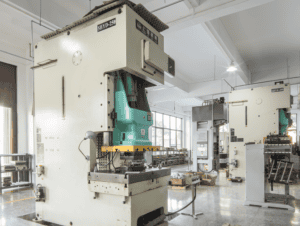
The combination of high production speed and excellent accuracy is what makes precision metal stamping so valuable. Instead of depending heavily on manual work, manufacturers can use metal press machines to maintain stable output, reduce human error, and improve overall productivity.
Types Of Metal Stamping
Metal stamping can be classified in several ways. One common way is by material form. Depending on the raw material, stamping may be described as sheet metal press, pipe press, profile press, or stripe press. These different forms are used in different industries and product structures.
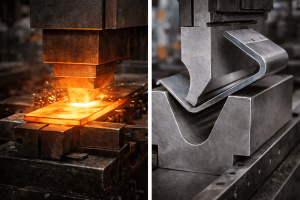
Another common classification is based on processing temperature. In this case, metal stamping includes hot stamping and cold stamping.
Hot stamping is suitable for materials that have higher deformation resistance or require better formability at elevated temperatures. In some industrial applications, hot pressing is used to help shape stronger materials that may be difficult to form under room-temperature conditions.
By contrast, cold stamping is performed at room temperature and is one of the most widely used processes in manufacturing. Since cold pressing does not require the same heating process, it can often be more efficient for thin sheet materials. In addition, cold forming may improve strength through work hardening, which is one reason why cold stamping is so important in automotive and electronics production.
Applications Across Industries
Metal stamping is used in many industries because it supports both large-volume production and strict quality requirements. In the automotive industry, stamping is used to produce structural parts, brackets, chassis components, and reinforcement parts. These parts must be strong, dimensionally stable, and economical to manufacture at scale, which makes precision metal stamping a natural choice.
In electronics, components often require thin walls, tight tolerances, and intricate shapes. Here, metal press work helps manufacturers produce shields, connectors, frames, and other precision components. In household appliances, industrial equipment, and scientific instruments, stamping is also widely used because it provides reliable performance and cost control.
As product designs become more advanced, the role of metal stamping machines becomes even more important. Manufacturers now rely on smarter systems, better tooling, and improved process control to deliver consistent products with minimal waste.

Stamping Process In Manufacturing
The stamping process in manufacturing usually includes several important steps. While the exact workflow depends on the product and the company’s capabilities, the core stages are often similar.
Tooling Design
Blanking
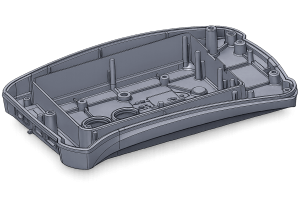
Blanking is the process of cutting the raw material into a basic shape before further forming operations begin. The size and shape of the blank directly affect later forming results. In sheet metal press operations, blanking is one of the most important early steps.
Punching
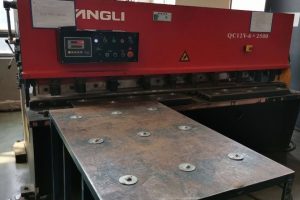
Punching creates holes, slots, and cutouts in the raw material. This is essential for products that require openings for fastening, ventilation, wiring, or assembly. Punching is one of the most common functions performed by metal press machines.
Bending
Bending changes the angle or contour of the part to meet the product design. This is one of the most recognizable forms of pressing metal into shape. Whether the product is a simple bracket or a complex enclosure, bending is often central to the stamping process in manufacturing.
Coining And Embossing
Coining applies high pressure to create fine details or strengthen local features, while embossing adds raised or recessed characters, logos, or identification marks. These processes are especially useful in precision metal stamping where part detail and appearance matter.
Conclusion
So, what is metal stamping? It is one of the most efficient and reliable manufacturing methods for pressing metal into shape and producing consistent parts at scale. From simple bending to complex stamping and pressing operations, this process remains essential to modern industry.
Because of its speed, repeatability, and adaptability, metal stamping continues to play a central role in automotive, electronics, industrial equipment, and many other sectors. As manufacturing technology keeps evolving, metal stamping will remain key drivers of modern production.
What Can Our Firm Offer To You?
We, Kaitao Tech, are a company devoted to manufacturing industry for over 25 years. We are rooted in the midstream of the global industrial chain, having cooperated with wide ranges of industries in the world, including automotive industry, optical instruments industry and consumer electronics industry. We will serve each customer with our best quality and we are glad to bring you with the benefits of economic globalization. Hope we can cooperate with you, offering you the most excellent experience.