
Quality Control In Manufacturing
In the current landscape of global manufacturing industry, companies increasingly work with partners across different regions to streamline production, reduce costs, and improve efficiency. At the same time, competition is becoming fiercer and customers are expecting higher standards than ever before. As a result, quality has become a decisive factor at every stage of production. A product that fails to meet expectations can quickly damage a brand’s reputation and disrupt its position in the supply chain. Consequently, manufacturers must prioritize quality at every stage of production, or they will be kicked out of the supply chain.
Quite cruel? To cope with the problem, industries keep evolving by uplifting their production standards so that they could provide customers with better products. During the period, industries have advanced a lot, managing to increase the quality of products through internal management. This article explores the development of quality control in manufacturing, the challenges companies face in maintaining high standards, and the quality control practices our company follows.
Quality And Manufacturing
Quality in manufacturing is much more than simple compliance with technical specifications. It’s your product not failing the second time it leaves the factory. From the perspective of buyers, If your product breaks faster than a dollar-store toy, they’ve wasted time and money on you. Quality in manufacturing transcends mere compliance with specifications, it reflects how reliable, durable, and consistent a product is, as well as how effectively it is produced. A commitment to quality ensures a reliable product. A reliable product ensures customer satisfaction, fosters brand loyalty and minimizes waste, all of which enhances profitability directly or indirectly.

Historical Evolution: From Inspection To Integration
The history of quality control can be traced back to the Industrial Revolution, when inspection was the main method used to identify defective products. At that time, many products were rejected only after they had already been manufactured, which made the process inefficient and costly.
This phenomenon wasn’t alleviated until statistical process control (SPC) was introduced in the 20th century. Pioneered by Walter Shewhart and later popularized by W. Edwards Deming, this process tapped statistics by analyzing production data, accordingly emphasizing data-driven decision-making. Later, the post-war era saw the rise of Total Quality Management (TQM), a holistic approach that involved every employee in continuous improvement. By the 1980s, methodologies like Six Sigma (popularized by Motorola and General Electric) and Lean Manufacturing (rooted in Toyota’s Production System) became widely adopted, helping companies reduce variation, eliminate waste, and improve operational efficiency.
Today, quality management continues to evolve. International organizations and certification systems now provide standards that help companies demonstrate competence and consistency. ISO 9001 has become one of the most widely recognized quality management standards in the world. In Europe, the CE mark helps show that products meet required safety and performance standards, while China’s CCC certification serves a similar purpose in the domestic market. These systems help manufacturers align with global expectations and build greater confidence among customers.

Quality Control In Manufacturing Industry
Quality control is essential to industries such as automotive, aerospace, healthcare and food where safety is paramount. After all, lapses in quality can lead to catastrophic consequences.
Quality Control In Car Manufacturing
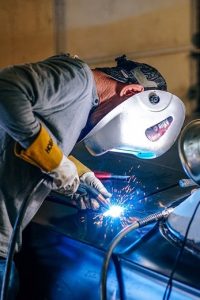
In automotive manufacturing, for example, even a small defect can have major consequences. The automotive industry doesn’t get to “fail fast and iterate.” A insensitive brake system isn’t a software bug you patch later and a faulty airbag sensor isn’t a flaw users can tolerate. In this industry, quality control isn’t about perfection—it’s about survival. Any save on parts may cause big outcomes and any mistakes caused by carelessness are unforgiven. Here’s why automotive quality control is a battlefield where complacency kills.
Quality Control In Food Manufacturing
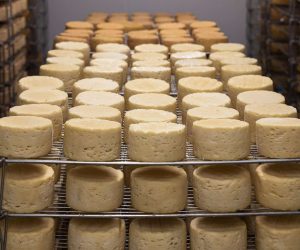
The same is true in food manufacturing. One mislabeled allergen, one batch of contaminated lettuce or one lazy inspection can hospitalize thousands, accordingly turning a billion-dollar brand into a shame one. Cut costs on testing? You’re not just risking fines, but playing Russian roulette with your customers’ lives.
How To Improve Quality In Manufacturing
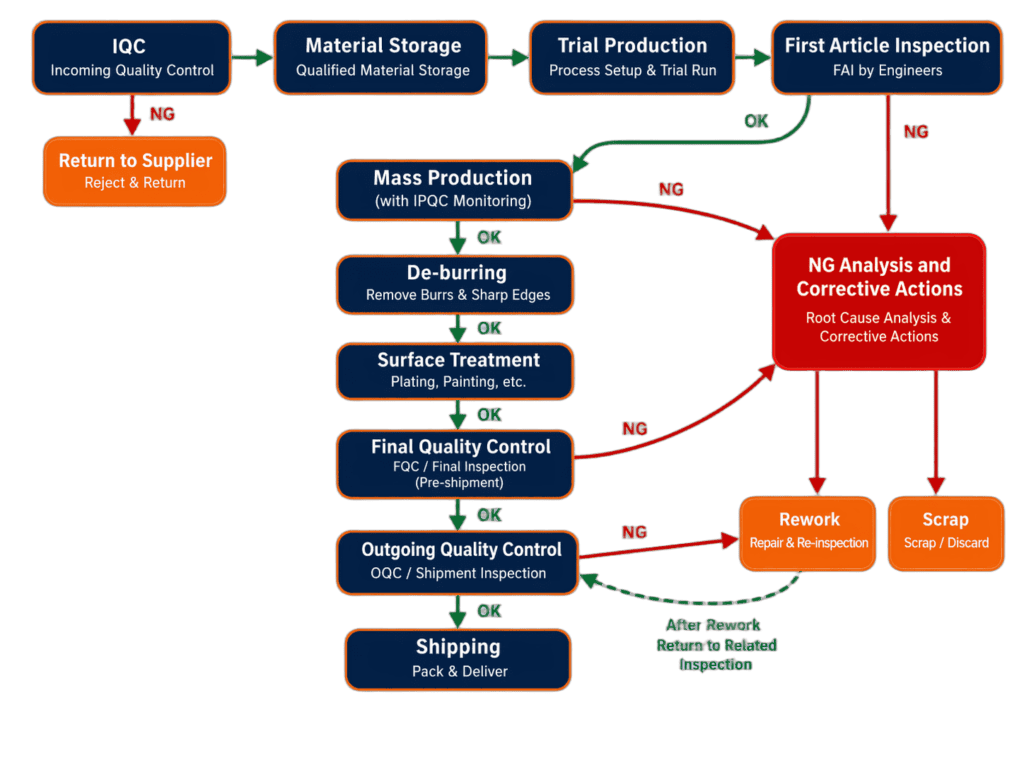
Our company applies Six Sigma principles in our quality control process, using the DMAIC framework: Define, Measure, Analyze, Improve, and Control. This structured approach helps us identify problems early and maintain consistency throughout production. Our quality control process includes five key steps. As you can see in the picture below.
Collaborate With Suppliers
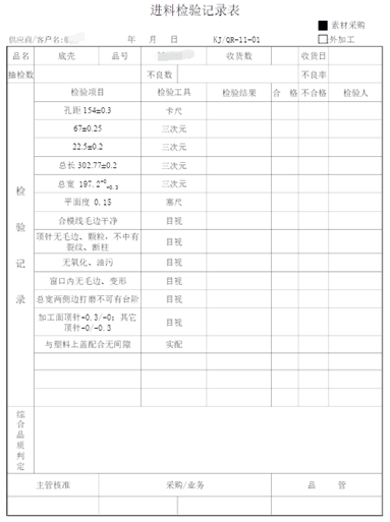
We work closely with trusted suppliers to ensure stable raw material quality from the very beginning. For materials such as aluminum and stainless steel, all incoming lots go through Incoming Quality Control (IQC) before entering production. Based on standardized incoming inspection records, we check key dimensions, surface condition, and other specification requirements by using visual inspection, calipers, and a coordinate measuring machine (CMM) where needed. This allows us to identify any nonconforming material at the earliest stage and ensures that only qualified raw materials are released to production.
Trial Production
Before mass production begins, we conduct trial production to verify that the product matches the design specifications and functional requirements. During this stage, our engineers carry out first article checks and process verification to evaluate the structure, dimensions, and overall production quality. Any non-conforming parts are either reworked or scrapped before the project moves forward.
In-Process Quality Control
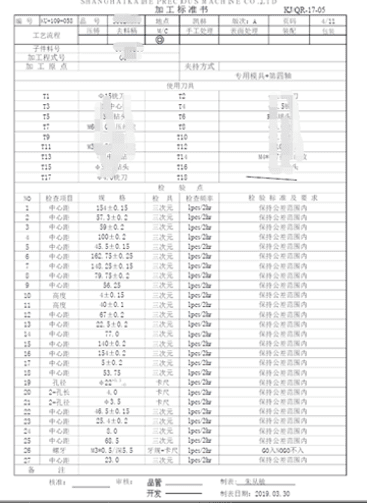
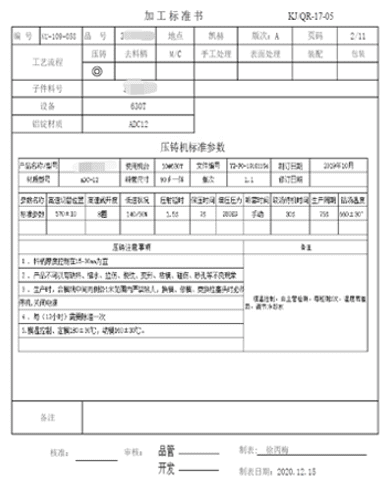
During mass production, we perform in-process quality control at fixed intervals. We use standardized inspection records for daily control. We follow the machining standard sheet for machining parts and the die casting standard sheet for die cast parts. We inspect samples throughout the production run. We check key dimensions, appearance, and other required items according to the standards. This helps us detect problems early. It also helps us prevent repeated defects and maintain stable quality.
Final Quality Control
After production and the necessary post-processing steps, such as de-burring and surface treatment, we carry out Final Quality Control (FQC). At this stage, we inspect the finished products for appearance, completeness, dimensions, and functional performance to ensure they meet both internal standards and customer requirements.
Outgoing Quality Control
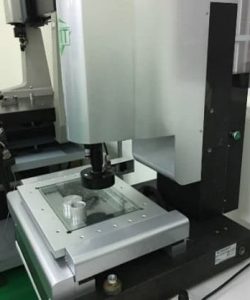
Before shipment, we conduct Outgoing Quality Control (OQC) as the final checkpoint. This inspection ensures that all finished products fully comply with quality standards before they are delivered to the customer. To support this process, we use a range of testing equipments, including a surface roughness tester, salt spray tester, and tension tester. These tools help us verify that our products are reliable, durable, and ready for use.
Conclusion
Quality control is the foundation of modern manufacturing. From raw material inspection to final shipment, every step matters. As markets become more competitive and customer expectations continue to rise, manufacturers must adopt stronger systems, better tools, and more disciplined processes to maintain quality.
For us, quality is not a one-time task. It is an ongoing commitment to precision, consistency, and improvement. By following a structured quality control process and applying industry standards, we aim to deliver products that meet customer expectations and stand the test of time.
What Can Our Firm Offer To You?
We, Kaitao Tech, are a company devoted to manufacturing industry for over 25 years. We have cooperated with wide ranges of industries in the world, including automotive industry, optical instruments industry and consumer electronics industry. We will serve each customer with our best quality. Hope we can cooperate with you, offering you the most excellent experience.