
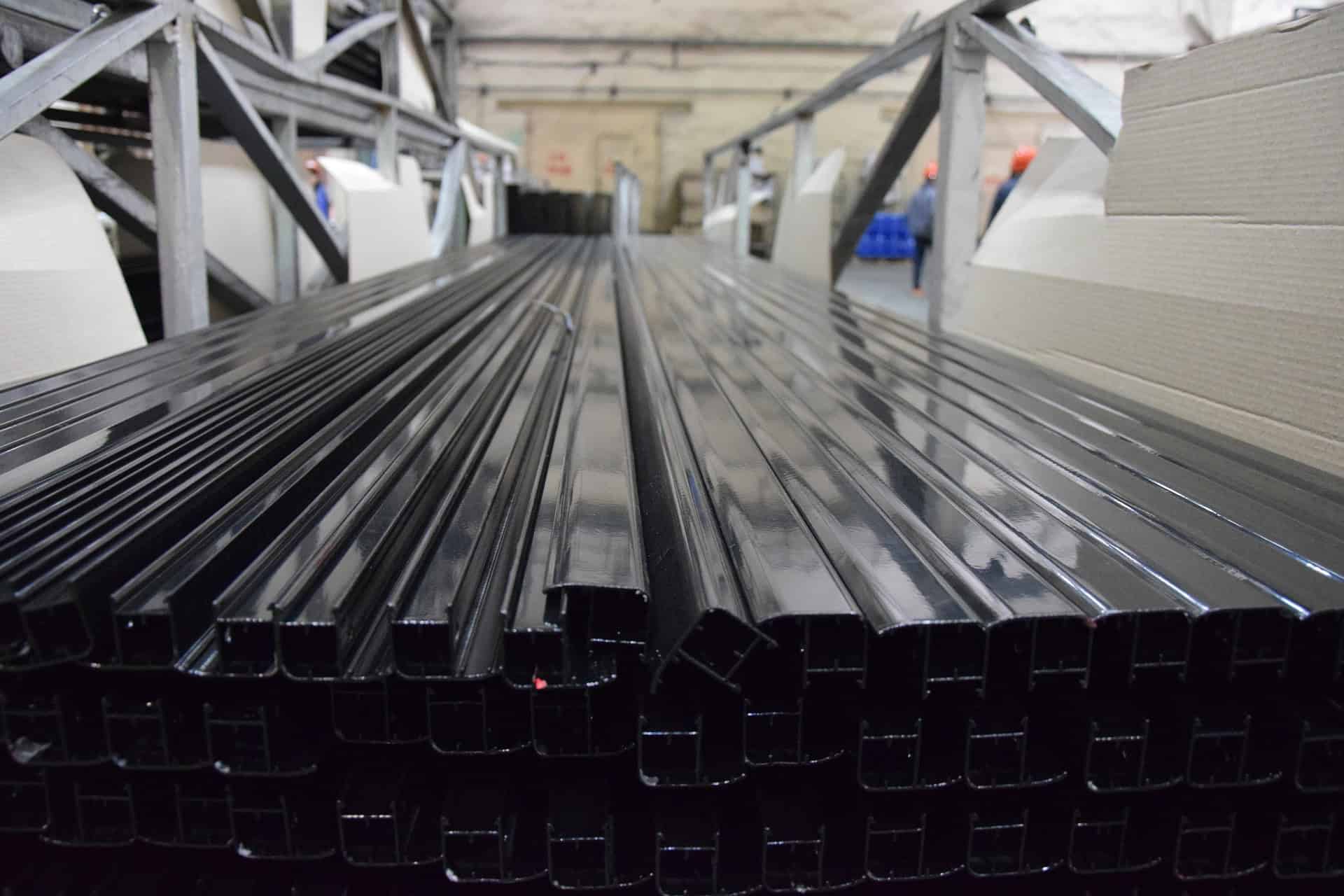
What Is Extruded Aluminum?
Extruded aluminum is one of the most practical materials used in modern manufacturing. It is lightweight, corrosion resistant, easy to process, and highly adaptable to different product designs. From industrial frames and electronic housings to transportation components and structural supports, extruded aluminum can be found in a wide range of applications where both performance and efficiency matter.
In simple terms, extruded aluminum is aluminum that has been forced through a specially designed die to create a continuous profile with a fixed cross-section. Instead of machining an entire shape from a solid block, the extrusion process forms the basic profile first, which can then be cut, machined, finished, and assembled into final products. This makes extruded aluminum an efficient choice for parts that require long, consistent shapes and good material utilization.
For manufacturers and buyers, extruded aluminum is not just a raw material. It is often the starting point of a larger production solution. At Kaitao Tech, extruded aluminum profiles are frequently combined with CNC machining, metal stamping, and die casting, depending on the final structure and performance requirements of the product. This gives customers more flexibility when developing custom parts and assemblies.
What Does Extruded Aluminum Mean
The word “extruded” refers to the process used to create the profile. In aluminum extrusion, a heated aluminum billet is pushed through a die under pressure. As the aluminum passes through the opening of the die, it takes on the desired cross-sectional shape and emerges as a long continuous profile.
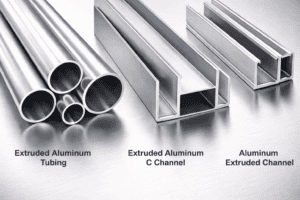
This is why extruded aluminum can appear in many different forms. Some profiles are basic, such as extruded aluminum bar, extruded aluminum angle, or extruded aluminum tube shapes. Others are more specialized, such as extruded aluminum tubing, extruded aluminum c channel, and aluminum extruded channel profiles designed for structural, electronic, or architectural use.
Once the profile has been extruded, it may be straightened, cut to length, and processed through additional operations. This is where the material becomes especially useful in custom manufacturing, because the same extrusion can later be drilled, milled, tapped, punched, coated, or assembled into more complex products.
Why Extruded Aluminum Is So Widely Used
There are several reasons why extruded aluminum remains so popular across industries.
First, it is lightweight. Aluminum offers good structural performance without the heavy mass associated with many other metals. This makes it especially attractive for transportation systems, industrial equipment, electronics, and any product where weight reduction helps improve performance or installation efficiency.

Second, it is corrosion resistant. Aluminum naturally forms a protective oxide layer, which helps it perform well in many environments. This makes extruded profiles suitable for both indoor and outdoor applications.
Third, extrusion allows manufacturers to create highly functional shapes. A single profile can integrate grooves, cavities, slots, reinforcement ribs, and mounting features that would otherwise require multiple components. This design freedom is one of the biggest strengths of aluminum extrusion.
Fourth, extrusion is efficient. For parts with a repeating cross-section, it is often more economical to form the profile first and then machine only the necessary details. This reduces material waste and can improve production efficiency in medium- and high-volume projects.
Applications of Extruded Aluminum
One of the reasons this material is so versatile is that it can be produced in many profile forms.In industrial and architectural systems, you will often see extruded aluminum rail, extruded aluminum track, extruded aluminum trim, and extruded aluminum window frame applications. In electronics and thermal management, extruded aluminum heatsink designs are especially common because they combine lightweight structure with efficient heat dissipation. Besides, extruded aluminum enclosure and extruded aluminum case components are often used to provide both protection and a clean external appearance.
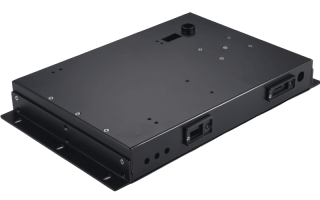
There are also many projects where extrusions are used alongside smaller supporting parts. For example, extruded aluminum accessories, extruded aluminum connectors, extruded aluminum corner joints, and extruded aluminum hinge components are frequently added to create modular structures, doors, covers, support frames, and adjustable assemblies. In this way, extrusion is not just one part, but part of a complete system.
How Extruded Aluminum Is Made
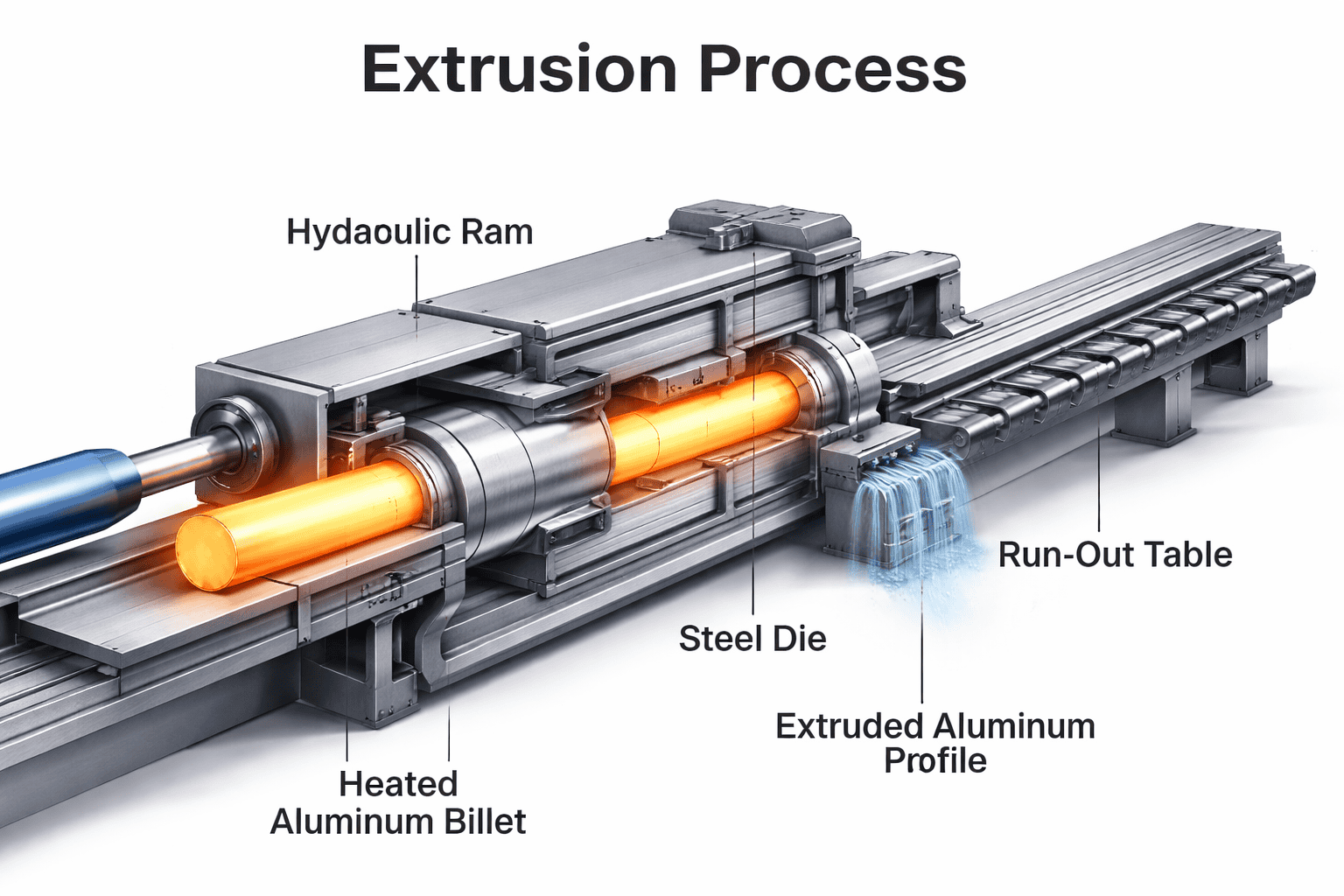
The aluminum extrusion process starts with an aluminum billet. The billet is heated until it becomes soft enough to be formed under pressure, but not melted into liquid form. It is then pushed through a specially designed die in an extrusion press.
As the material exits the die, it takes on the profile shape. It is then cooled, straightened, and cut into workable lengths. At that point, the extrusion may already be suitable for some applications, but in many real manufacturing environments it still needs further processing.
How to Cut Extruded Aluminum
A very common question is how to cut extruded aluminum properly.
The answer depends on the profile shape, wall thickness, required tolerance, and production quantity. For general workshop use, extruded aluminum can usually be cut with a miter saw, circular saw, band saw, or CNC saw, as long as the machine is fitted with a blade suitable for non-ferrous metals.
A fine-tooth carbide blade is often preferred because it helps create a cleaner cut and reduces burr formation. Before cutting, the profile must be clamped securely. Whether you are cutting an extruded aluminum bar, extruded aluminum tubing section, or an aluminum extruded channel, movement during cutting can affect both safety and dimensional accuracy.
The cut should be made steadily rather than aggressively. Excessive force may cause vibration, rough edges, or reduced cut quality. After cutting, deburring is usually necessary to remove sharp edges and improve surface finish.
For industrial production, CNC cutting is often the best solution. It provides better repeatability, more accurate length control, and cleaner results for high-volume orders. This is especially important when the extruded aluminum will later go through machining, assembly, or surface treatment.
Extruded Aluminum and CNC Machining
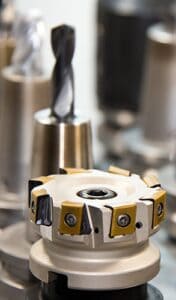
Extruded aluminum and CNC machining are often used together because they solve different parts of the same manufacturing problem.
Extrusion is highly efficient for creating the basic profile, but many finished parts also require holes, threads, slots, pockets, and trimmed geometries that cannot be formed in the extrusion alone. CNC machining adds those details accurately and consistently.
This combination is especially useful for custom frames, extruded aluminum enclosure parts, machine supports, rail systems, heat sink structures, and other precision products. In many cases, extrusion reduces the amount of machining needed, while CNC machining ensures the profile is fully functional for the final assembly.
Extruded Aluminum with Metal Stamping and Die Casting
Extruded aluminum can also be integrated with metal stamping and die casting in larger projects.
Metal stamping is useful when the assembly also requires thin-sheet parts such as brackets, clips, mounting plates, covers, or reinforcement tabs. For example, an extruded main body may be combined with stamped support parts to reduce material cost and improve assembly flexibility.
Die casting, on the other hand, is often the better choice for parts with more complex three-dimensional geometry. In some products, an extruded aluminum body may be paired with die cast connectors, end caps, base components, or mounting nodes. This allows engineers to take advantage of extrusion for long linear sections while using die casting for more detailed structural forms.
This is why aluminum extrusion should not be seen in isolation. In many modern products, it works best as one part of a broader manufacturing solution.
Conclusion
So, what is extruded aluminum? It is aluminum that has been shaped through an extrusion process to form long, continuous profiles with specific cross-sections. It is widely used because it is lightweight, corrosion resistant, easy to process, and highly flexible in design.
Its value becomes even greater when it is combined with secondary manufacturing processes. Profiles can be cut accurately, machined precisely, integrated with stamped parts, and paired with die cast components in more advanced assemblies.
And when it comes to how to cut extruded aluminum, the principle is simple: choose the right tool, secure the material properly, control the cut carefully, and finish the edges well. In real production, that combination of extrusion, cutting, and precision processing is what turns aluminum profiles into reliable finished components.
What Can Our Firm Offer To You?
Kaitao Tech has been serving the manufacturing industry for over 25 years. As an experienced supplier positioned in the midstream of the global industrial chain, we have supported customers in a wide range of industries, including automotive, optical instruments, and consumer electronics. With advanced CNC machining equipment and strong production capabilities, we provide precision machining services for a variety of custom metal components, including extruded aluminum parts and other complex industrial products. By combining machining expertise with practical manufacturing experience, we help customers achieve reliable quality, accurate dimensions, and efficient production. We look forward to building long-term cooperation and delivering an outstanding customer experience.