
What Is The International Division Of Labor
Nowadays, it is common to start the day with a cup of coffee, commute by bus or car, and spend hours working on computers in an office or at home. Indeed, these ordinary routines are made possible by a global system of production and exchange that connects countries across the world. This kind of connection has a narrative name, international division of labor(IDL). From the coffee people drink every morning to the electronic devices they depend on, many of these products are the result of the international division of labor. But what exactly is it, and how did it develop? This article explores the concept, its historical evolution, and the possible impact of trade friction on the global economic order.
International Division Of Labor Definition
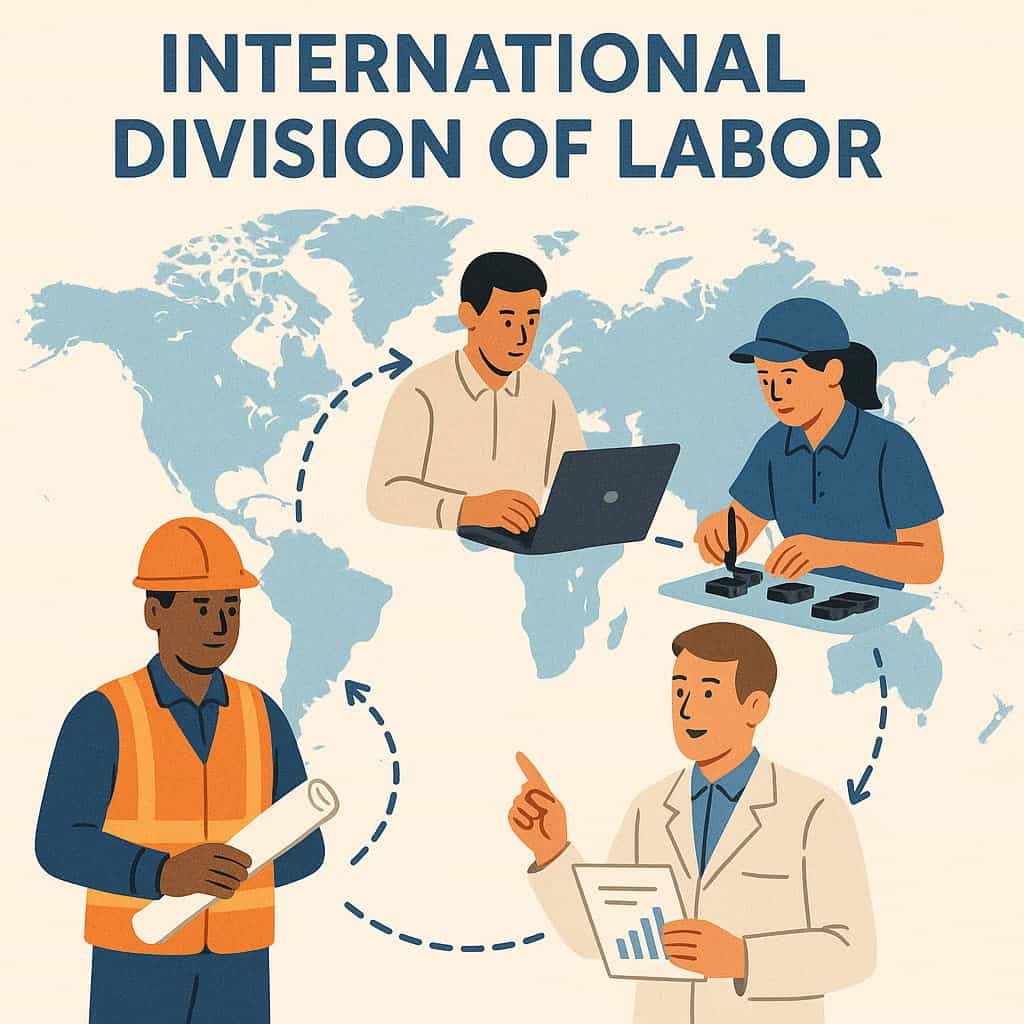
The global division of labor refers to the global allocation of tasks, resources, and production processes among different countries. This allocation is driven by specialization and comparative advantage. In simple terms, countries tend to focus on the industries and products they can produce most efficiently, and then trade with one another to obtain the goods and services they do not produce as efficiently themselves.
A useful example is the coffee industry. Coffee beans are grown mainly in tropical and subtropical regions, which means that some low-latitude countries naturally specialize in coffee cultivation. Other countries may specialize in roasting, packaging, logistics, branding, or retail. In this way, a single product reflects the combined efforts of many regions and industries.

Comparative advantage is one of the key principles behind this system. In simple terms, it means a country does not need to produce everything on its own, but benefits by focusing on what it can produce at relatively lower cost or higher efficiency, while relying on trade to access other goods. As a result, the international division of labor has become a major force driving economic globalization. Today, global production chains are often divided into upstream, midstream, and downstream stages, covering raw materials, manufacturing, and sales. While this structure promotes growth and knowledge exchange, it also raises concerns about inequality, sustainability, and labor rights.

The Old International Division Of Labor
The roots of the international division of labor can be traced back to colonialism. During that period, colonies were often forced to supply raw materials to European powers, while European industries processed those materials into manufactured goods. The Industrial Revolution further strengthened this dynamic by expanding production capacity and building more extensive global trade networks.
A famous example is cotton. Raw cotton was collected from colonies, transported to the United Kingdom, processed into fabrics, and then sold across the world through Britain’s global trading system. In the book of Empire of Cotton, author clearly depicts the process. This process illustrates how the old international division of labor was built on unequal relationships between countries.
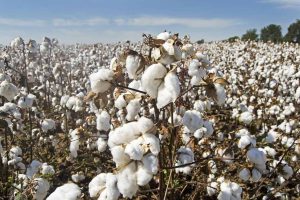
However, this old system was deeply unfair. On one side, people responsible for reaping cotton were usually enslaved or exploited and received little or no compensation for their labor. On the other side, slave owners could reap huge economic profits. In many ways, the history of colonialism is also a history of violence, inequality, and extraction. The old international division of labor was therefore not only an economic arrangement, but also a reflection of power imbalance on a global scale.
The New International Division Of Labor
The 20th century saw IDL evolve with post-WWII globalization. Institutions like the World Trade Organization(WTO) and International Monetary Fund(IMF) promoted free trade and set up as a stabilizer of the global trade. At the same time, multinational corporations expanded rapidly and began organizing production across multiple countries.
This created a new international division of labor. Instead of entire industries being concentrated in one country, different stages of production were now distributed across borders. For example, Volkswagen established subsidiaries in partnership with local Chinese governments to better enter the Chinese market.
David Ricardo’s theory of comparative advantage became especially important in this context. Countries increasingly specialized in sectors where they had the greatest efficiency. For instance, China became a major manufacturing hub, while India developed strong advantages in information technology and services. Compared with the old system, the new international division of labor also brought some improvements in labor protection and worker rights, alongside the rise of international labor standards and organizations.
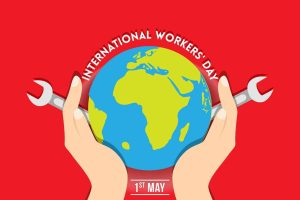
Compared with the old one, the new international division of labor also improved worker benefits, including setting up world labor day and establishing a union.
However, the inequity between countries still exists, income gaps between countries remain significant, and many developing regions continue to lag behind wealthier economies. According to average annual income provided by worlddata, the average income between countries remains a gap, where Africa is still the poorest region in the world. Rich countries usually have stronger capital, technology, and infrastructure, which allows them to move faster in the global competition. Poorer countries, by contrast, may remain stuck in low-value-added industries and find it difficult to upgrade their position in the global value chain. As a result, the global division of labor actually widens this gap.
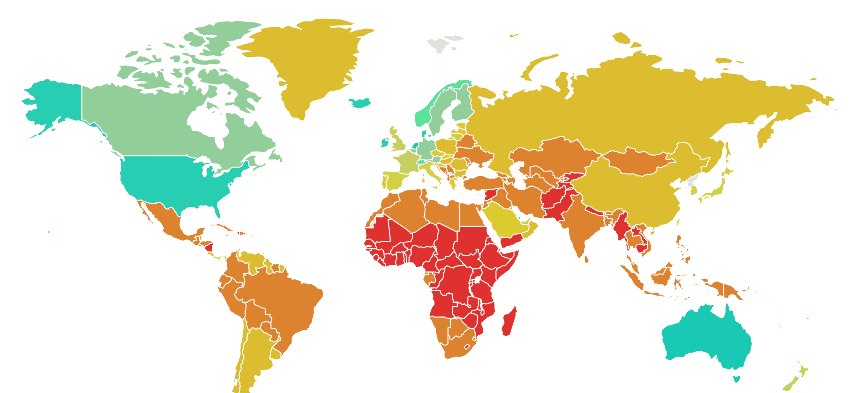
Besides, such inequality also reflects on the environment and labor rights. Environmental pressure and labor exploitation are often more severe in developing countries, where heavy industry and long working hours are frequently used to maintain competitiveness.
The Impact Of Trade Friction On The International Division Of Labour
Trade friction and trade wars can significantly reshape the international division of labor. Since the trade conflict between the United States and China began in 2018, concerns about deglobalization have increased. In recent years, under the second term of Trump, the trade war has become increasingly intense. Trade restrictions, tariffs, and geopolitical tensions have forced many companies to reconsider where they source materials and manufacture goods. The impact of trade friction on the international division of labor is multifaceted, reshaping global economic dynamics in several key ways:
Reduced Specialization And Efficiency:
One major effect is reduced specialization and efficiency. Trade barriers like quota and tariffs increase the costs of cross-border trade, discouraging countries from specializing in areas of comparative advantage. For example, Trump tried to uplift tariffs of imported goods to propel manufacturing returning to America. However, this may lead to an inefficient domestic production of goods, which may cause increasing living costs.
Supply Chain Reconfiguration:
Another important effect is supply chain reconfiguration. To avoid trade barriers, firms may relocate production to other countries or diversify their supply chains in order to bypass tariffs. For example, the supply chain of Apple was moved from China to India or Southeast Asia. This reshapes the international division of labor by creating new hubs of specialization while disrupting existing networks.
The international division of labor remains a double-edged sword. While it drives economic integration and development, it also perpetuates inequalities and environmental costs. As the world steps into a new era when economic globalization seems to walk away, the IDL is left as a legacy of it. Policymakers and corporations must collaborate to ensure the IDL fosters inclusive growth, prioritizing fair wages, environmental stewardship and resilient economies in an ever-evolving world.
Conclusion
The international division of labor is both a driver of global growth and a source of global inequality. It has helped connect economies, increase efficiency, and speed up technological exchange. At the same time, it has also contributed to uneven development, environmental pressure, and labor injustice. As the world enters a more uncertain period marked by trade tensions and restructuring supply chains, the international division of labor is likely to continue evolving.
For policymakers and corporations, the challenge is not to abandon global cooperation, but to make it fairer and more sustainable. A healthier global system should support decent wages, protect the environment, and give developing countries more opportunities to move up the value chain. Only then can the international division of labor become a truly inclusive force for shared progress.
What Can Our Firm Offer To you?
We, Kaitao Tech, are a company devoted to manufacturing industry for over 25 years. We are rooted in the midstream of the global industrial chain, having cooperated with wide ranges of industries in the world, including automotive industry, optical instruments industry and consumer electronics industry. We will serve each customer with our best quality and we are glad to bring you with the benefits of economic globalization. Hope we can cooperate with you, offering you the most excellent experience.