
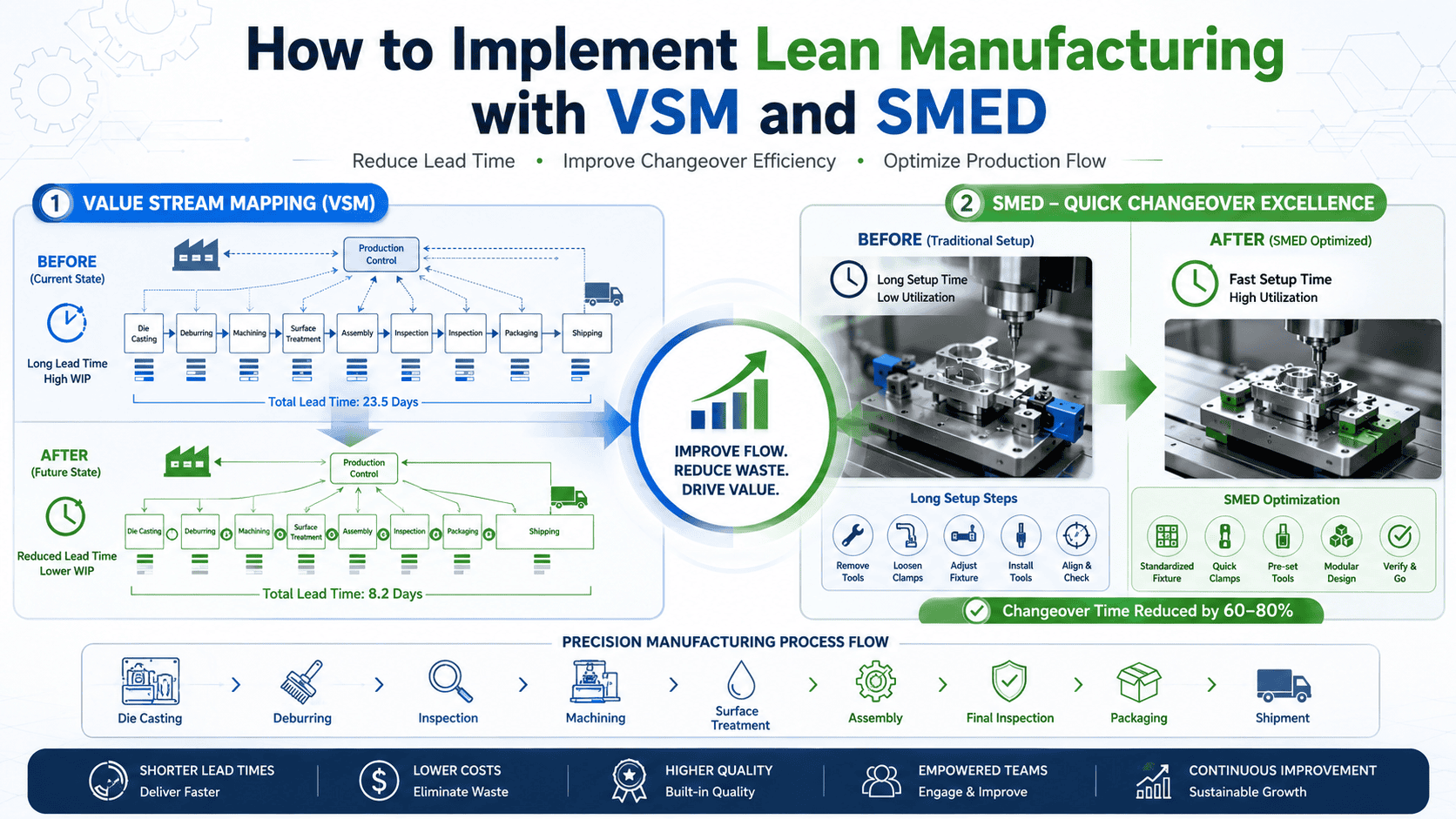
How to Implement Lean Manufacturing
At Kaitao Tech, lean manufacturing is not just a management concept. It is a practical method we use to improve our daily precision manufacturing operations. In a real production environment, especially in processes such as die casting, deburring, material inspection, machining, process inspection, surface treatment, assembly, finished product inspection, packaging, and shipment, the challenge is often not caused by one single machine or one single department.
Instead, the real challenge usually exists across the whole production flow: materials wait between processes, work-in-process inventory increases, communication becomes complicated, changeover takes too long, and the production rhythm does not always match actual customer demand. This is why we believe lean manufacturing should start with process visibility. Based on our own lean improvement experience, two tools have been especially useful: Value Stream Mapping (VSM) and Single-Minute Exchange of Die (SMED).
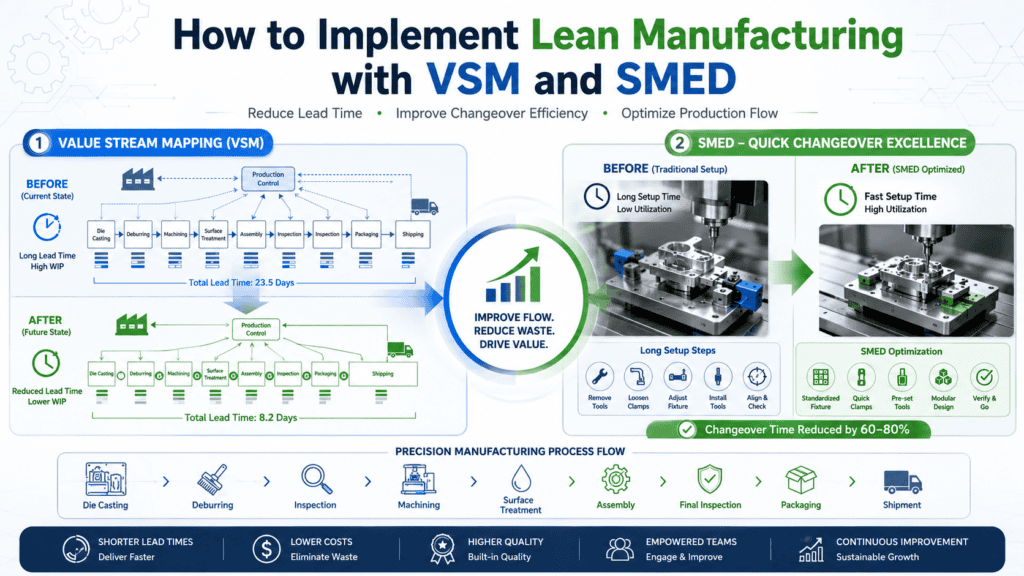
Using VSM to See the Whole Value Stream
Value Stream Mapping is one of the most practical tools we use to understand the complete flow of materials and information.
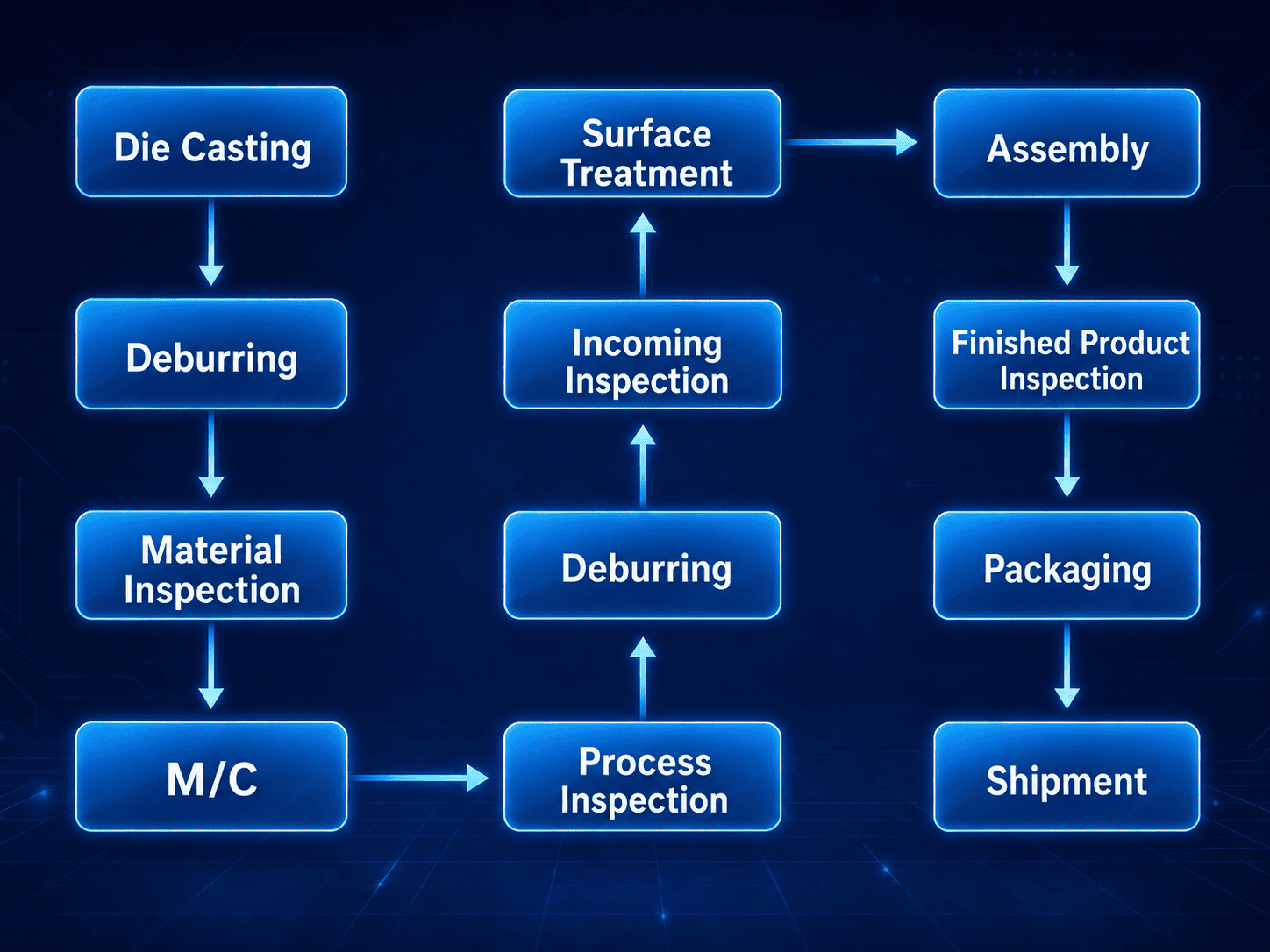
In precision manufacturing, a product may go through many steps: die casting, deburring, material inspection, machining, process inspection, additional deburring, surface treatment, assembly, final inspection, packaging, and shipment. Each process may seem necessary when viewed separately. However, when we look at the entire value stream, we often find that the total lead time is much longer than the actual value-added processing time.
This is where VSM becomes powerful.
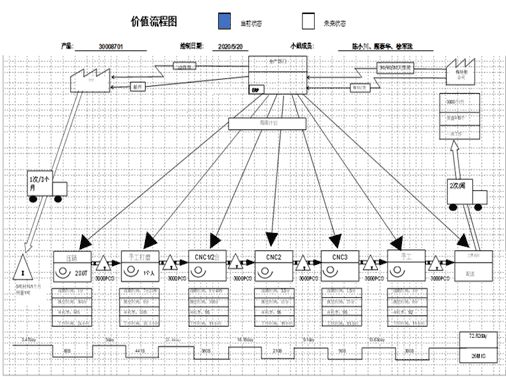
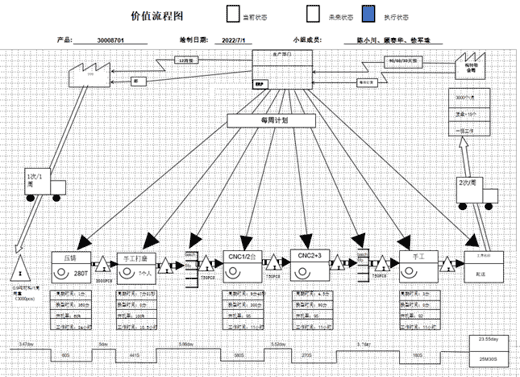
In our VSM improvement case, the current-state map helped us clearly see where materials were waiting, where inventory was accumulating, where information flow was not smooth, and where overproduction was created by planning based on monthly demand. After analyzing the current state, our team designed a future-state VSM with clearer production rhythm, smoother material flow, and better connection with customer demand. One important improvement was changing from monthly demand-based production to weekly demand-based production, which helped reduce overproduction and unnecessary inventory.
Through this VSM improvement, the total lead time was reduced from 72.82 days to 23.55 days, achieving a reduction of approximately 67.65%. For us, this result proves that lean improvement is not only about making one machine faster. A machine can be efficient, but if materials are still waiting before or after that process, the customer will not receive the product faster. VSM helps us shift from “department thinking” to “flow thinking,” allowing production, engineering, quality, warehouse, logistics, planning, and management teams to work toward the same improvement target.
Using SMED to Reduce Changeover Time
While VSM helps us see the overall production flow, SMED helps us improve one of the most common bottlenecks in manufacturing: long changeover time. In precision manufacturing, changeover may involve fixtures, tools, clamps, machining programs, gauges, materials, and repeated adjustments. If changeover takes too long, production teams tend to make larger batches to avoid frequent switching. This creates more inventory, longer lead time, lower flexibility, and a higher risk of overproduction.
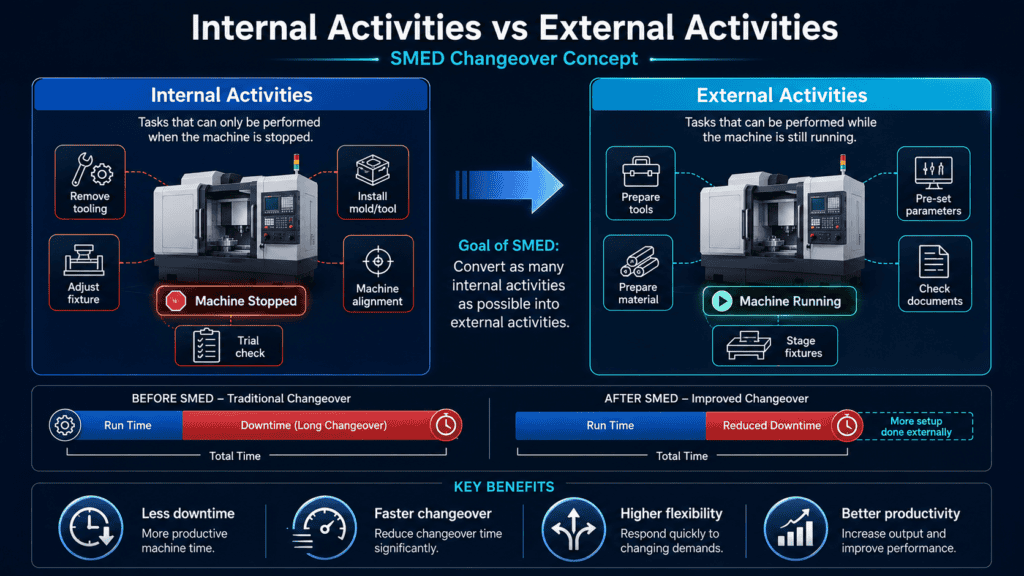
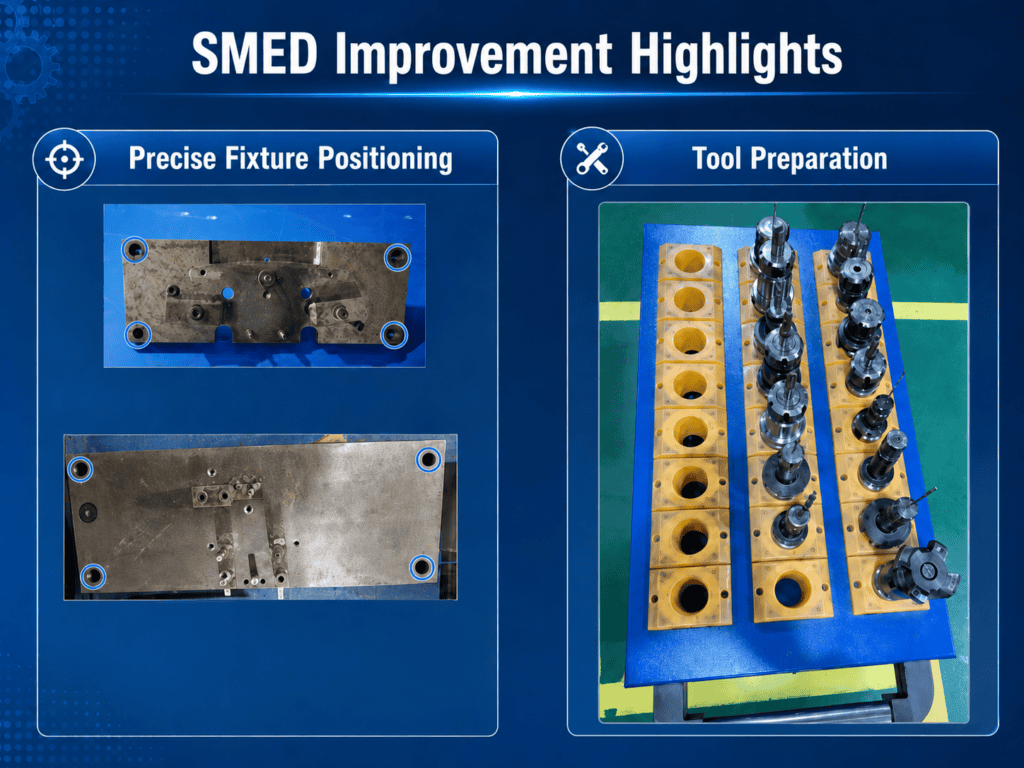
SMED helps solve this problem by separating setup work into internal activities and external activities. Internal activities are tasks that must be completed while the machine is stopped, while external activities are tasks that can be prepared before the machine stops. In our SMED improvement case, we analyzed the setup process on site, reviewed each step, and identified opportunities to prepare tools and materials in advance, improve fixture positioning, reduce repeated adjustment, and standardize the operation sequence.
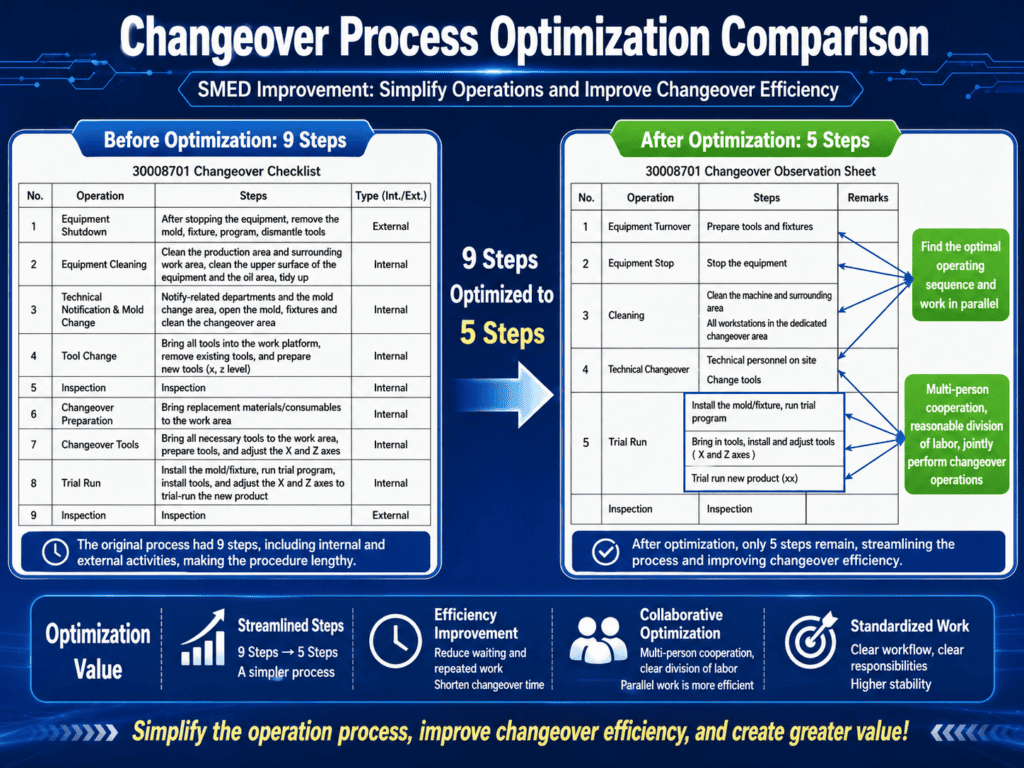
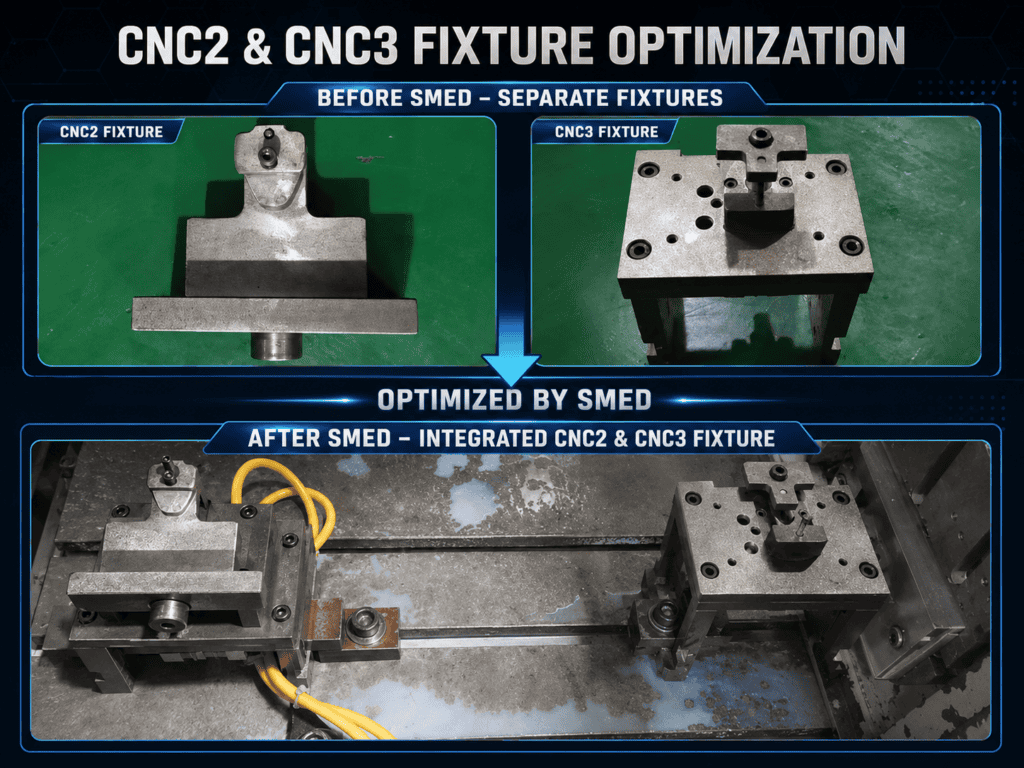
As shown in our improvement case, the setup process was optimized from 9 steps to 5 steps. This was not achieved by simply asking operators to work faster, but by redesigning the way the work was organized. We improved fixture positioning, prepared tools and materials in advance, and reduced unnecessary adjustment during machine downtime. In addition, through process review and optimization, CNC2 and CNC3 were arranged more efficiently, helping improve machining efficiency by around 10%. After the improvement, the new process was standardized through SOPs, checklists, and training, so the result could be repeated and sustained.
How VSM and SMED Work Together
From our experience, VSM and SMED should not be treated as two separate lean tools. They work best when they are connected. VSM helps us identify where the biggest problems exist in the overall value stream, while SMED helps us solve one of the root causes behind poor flow.
For example, a VSM map may show that inventory is too high before machining or surface treatment. At first, this may look like a warehouse or planning issue. But after deeper analysis, the root cause may be long changeover time. Because changeover is difficult, production prefers large batches. Large batches create more inventory, more inventory creates more waiting, and more waiting increases total lead time. In this situation, SMED becomes a key method to support the future-state VSM.
What We Learned from Our Lean Improvement Practice
At Kaitao Tech, our lean manufacturing practice has taught us that improvement does not happen through one single tool or one short-term project. It comes from daily observation, cross-functional teamwork, and the willingness to keep challenging the current process. VSM helped our team look beyond individual operations and understand how the entire value stream affects delivery, inventory, and customer response.
SMED helped us turn detailed shop-floor problems into practical actions, such as better preparation, fixture improvement, shorter setup time, and more standardized work. More importantly, these improvements encouraged our teams from production, engineering, quality, warehouse, and planning to work with the same target: making the process flow better.
For us, lean manufacturing is not about asking people to work faster. It is about designing a better system so people can work more efficiently and consistently. By making problems visible, improving them step by step, and standardizing successful practices, we continue to build a more flexible, reliable, and customer-focused manufacturing operation.
Conclusion
Lean manufacturing is a continuous improvement journey. For Kaitao Tech, VSM and SMED are not only tools, but also practical ways to connect process visibility with real shop-floor improvement. VSM allows us to see the whole flow, identify waste, and reduce lead time. SMED helps us improve changeover efficiency, support smaller batches, and increase production flexibility.
By combining these two methods, we can build a manufacturing system that is more responsive, more stable, and better aligned with customer needs. This is how lean manufacturing moves from theory to real business value in precision manufacturing.
What Can Our Firm Offer To You?
Kaitao Tech has been serving the manufacturing industry for over 25 years. As an experienced supplier positioned in the midstream of the global industrial chain, we have supported customers in a wide range of industries, including automotive, optical instruments, and consumer electronics. With advanced CNC machining equipment and strong production capabilities, we provide precision machining services for a variety of custom metal components.
Through years of working with complex manufacturing processes, we have learned that reliable quality, accurate dimensions, and efficient production do not come only from advanced equipment. They also depend on stable processes, smooth material flow, clear standards, and continuous improvement. This is why lean manufacturing has become an important part of how we improve our operations at Kaitao Tech. By combining machining expertise with practical lean improvement methods, we help customers achieve better quality, shorter lead time, and a more efficient production experience. We look forward to building long-term cooperation and delivering outstanding value to our customers.